


Bridging Minds with Quantum Computing: Revolutionizing Speech Assistance


By: Shahaf Asban, Ph.D.
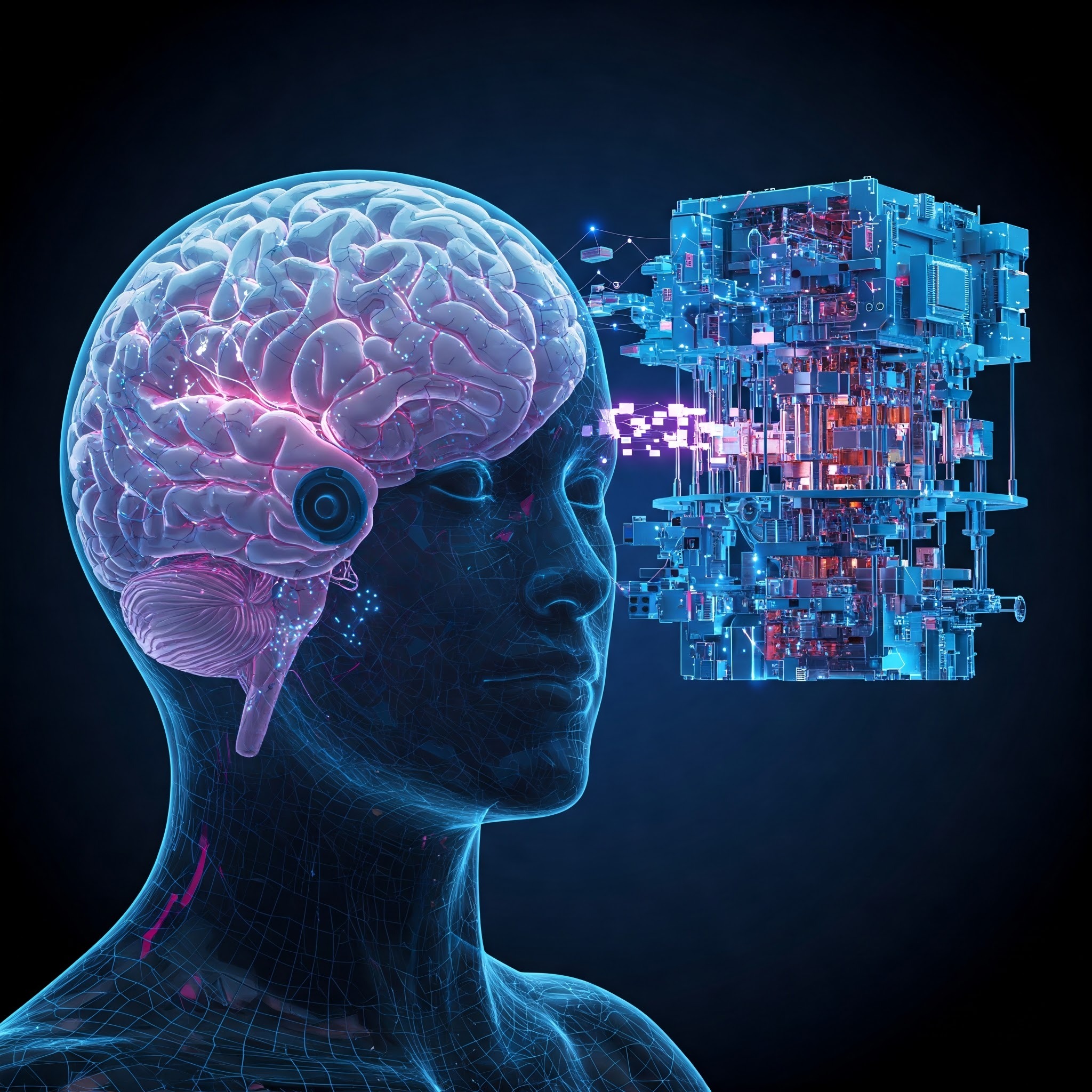
In our ever-evolving journey to merge advanced technology with human potential, our Classiq Technologies, a leading contributor in quantum software, is proud to announce a groundbreaking collaboration with Tel-Aviv Sourasky Medical Center, Ichilov—a leading research center at one of Israel’s top hospitals. In a research led by Prof. Ido Strauss and Dr. Ariel Tankus (Ichilov), Dr. Shahaf Asban and Nati Erez (Classiq), we are charting a new course in brain-machine interfaces (BMIs) by harnessing the power of hybrid classical/quantum algorithms, specifically Quantum Neural Networks (QNNs), to decode and forecast speech intentions from neural signals.
A New Frontier in Brain-Machine Interfaces
Our project taps into the rich, complex signals captured by probes implanted in patients’ brains. These patients, who volunteer for the study due to existing neurological conditions, have probes placed in non-targeted brain regions as part of their ongoing treatments. Remarkably, amidst these diverse electrical activities, we can isolate “echoes” of speech intent—moments when the patient thinks about what they want to say. By recording these electrical signals, we transform them into time series data that we subsequently analyze to forecast intended speech. Our initial focus is on distinct vowel sounds—'a', 'e', 'i', 'u', and 'o'—where the separation in the signal is most pronounced, with plans to eventually scale the system to decode full words and sentences.
This innovative approach builds on decades of research in brain-computer interfacing, with foundational studies such as Wolpaw and Wolpaw’s comprehensive review of BMI principles [1] and early breakthroughs in neural ensemble control demonstrated by Hochberg et. al.[2].
Quantum Neural Networks: A Game-Changer in Signal Classification
At the core of our research is the integration of quantum computing with classical machine learning—a hybrid approach that employs Quantum Neural Networks for high-performance classification. Unlike traditional neural networks, QNNs leverage quantum phenomena such as superposition and entanglement to explore complex, high-dimensional data landscapes more efficiently. This quantum advantage allows our algorithms to potentially recognize subtle patterns in neural signals with greater accuracy than classical methods, a possibility supported by recent advances in quantum machine learning [3,4].
By integrating quantum processing into our analytical pipeline, we are opening the door to real-time interpretation of neural data—a crucial step toward creating BMIs that can deliver immediate speech assistance to patients who have lost their natural ability to communicate.
Join Us on the Journey Ahead
As we continue to refine our algorithms and expand our research, we invite academic researchers, medical professionals, government agencies, and investors to join us in this exciting journey. Together, we can harness the power of quantum computing to push the boundaries of what is possible in brain-machine interfaces, transforming lives and shaping the future of healthcare.
Together, we are paving the way for a future where advanced quantum technologies bridge the gap between thought and communication—empowering those who need it most.
References
- Wolpaw, Jonathan, and Elizabeth Winter Wolpaw (eds), Brain–Computer Interfaces: Principles and Practice (2012; online edn, Oxford Academic, 24 May 2012), https://doi.org/10.1093/acprof:oso/9780195388855.001.0001.
- Hochberg, L., Serruya, M., Friehs, G. et al. Neuronal ensemble control of prosthetic devices by a human with tetraplegia. Nature 442, 164–171 (2006). https://doi.org/10.1038/nature04970
- Biamonte, J., Wittek, P., Pancotti, N. et al. Quantum machine learning. Nature 549, 195–202 (2017). https://doi.org/10.1038/nature23474
- Havlíček, V., Córcoles, A.D., Temme, K. et al. Supervised learning with quantum-enhanced feature spaces. Nature 567, 209–212 (2019). https://doi.org/10.1038/s41586-019-0980-2
By: Shahaf Asban, Ph.D.
In our ever-evolving journey to merge advanced technology with human potential, our Classiq Technologies, a leading contributor in quantum software, is proud to announce a groundbreaking collaboration with Tel-Aviv Sourasky Medical Center, Ichilov—a leading research center at one of Israel’s top hospitals. In a research led by Prof. Ido Strauss and Dr. Ariel Tankus (Ichilov), Dr. Shahaf Asban and Nati Erez (Classiq), we are charting a new course in brain-machine interfaces (BMIs) by harnessing the power of hybrid classical/quantum algorithms, specifically Quantum Neural Networks (QNNs), to decode and forecast speech intentions from neural signals.
A New Frontier in Brain-Machine Interfaces
Our project taps into the rich, complex signals captured by probes implanted in patients’ brains. These patients, who volunteer for the study due to existing neurological conditions, have probes placed in non-targeted brain regions as part of their ongoing treatments. Remarkably, amidst these diverse electrical activities, we can isolate “echoes” of speech intent—moments when the patient thinks about what they want to say. By recording these electrical signals, we transform them into time series data that we subsequently analyze to forecast intended speech. Our initial focus is on distinct vowel sounds—'a', 'e', 'i', 'u', and 'o'—where the separation in the signal is most pronounced, with plans to eventually scale the system to decode full words and sentences.
This innovative approach builds on decades of research in brain-computer interfacing, with foundational studies such as Wolpaw and Wolpaw’s comprehensive review of BMI principles [1] and early breakthroughs in neural ensemble control demonstrated by Hochberg et. al.[2].
Quantum Neural Networks: A Game-Changer in Signal Classification
At the core of our research is the integration of quantum computing with classical machine learning—a hybrid approach that employs Quantum Neural Networks for high-performance classification. Unlike traditional neural networks, QNNs leverage quantum phenomena such as superposition and entanglement to explore complex, high-dimensional data landscapes more efficiently. This quantum advantage allows our algorithms to potentially recognize subtle patterns in neural signals with greater accuracy than classical methods, a possibility supported by recent advances in quantum machine learning [3,4].
By integrating quantum processing into our analytical pipeline, we are opening the door to real-time interpretation of neural data—a crucial step toward creating BMIs that can deliver immediate speech assistance to patients who have lost their natural ability to communicate.
Join Us on the Journey Ahead
As we continue to refine our algorithms and expand our research, we invite academic researchers, medical professionals, government agencies, and investors to join us in this exciting journey. Together, we can harness the power of quantum computing to push the boundaries of what is possible in brain-machine interfaces, transforming lives and shaping the future of healthcare.
Together, we are paving the way for a future where advanced quantum technologies bridge the gap between thought and communication—empowering those who need it most.
References
- Wolpaw, Jonathan, and Elizabeth Winter Wolpaw (eds), Brain–Computer Interfaces: Principles and Practice (2012; online edn, Oxford Academic, 24 May 2012), https://doi.org/10.1093/acprof:oso/9780195388855.001.0001.
- Hochberg, L., Serruya, M., Friehs, G. et al. Neuronal ensemble control of prosthetic devices by a human with tetraplegia. Nature 442, 164–171 (2006). https://doi.org/10.1038/nature04970
- Biamonte, J., Wittek, P., Pancotti, N. et al. Quantum machine learning. Nature 549, 195–202 (2017). https://doi.org/10.1038/nature23474
- Havlíček, V., Córcoles, A.D., Temme, K. et al. Supervised learning with quantum-enhanced feature spaces. Nature 567, 209–212 (2019). https://doi.org/10.1038/s41586-019-0980-2