


HPC job orchestration


Classiq & QM Collaborating on the Israeli Quantum Computing Center
Classiq provides the quantum software layer at the Israeli Quantum Computing Center (IQCC), connecting its HPC environment with multiple quantum hardware technologies. This integration enables researchers to develop, optimize, and execute quantum applications across different QPUs through a unified workflow.
The collaboration
Within the Israeli Quantum Computing Center (IQCC), Classiq provides advanced quantum software capabilities that complement the center’s unique multi-hardware environment and its tight integration of quantum systems with high-performance classical computing.
The IQCC, opened by Quantum Machines at Tel Aviv University with support from the Israel Innovation Authority, is designed as an open, interoperable facility that integrates multiple co-located quantum computers based on different qubit modalities with NVIDIA DGX Quantum and cloud resources, supporting hybrid quantum-classical workflows.
By making high-level quantum program synthesis and hardware-aware circuit optimization available to IQCC users, Classiq helps researchers and developers rapidly turn algorithmic ideas into runnable circuits across different backends. This accelerates experimentation, supports performance comparisons across platforms, and enables teams to focus on application logic rather than low-level circuit engineering.
Technical explanation
Classiq provides three main components to IQCC:
- Quantum software development platform, connected to the IQCC quantum backends, and enabling Classiq’s users to leverage the IQCC backends through the Classiq platform.
- Software package, enabling users to submit quantum jobs to the HPC scheduler. It is a user-side stack for integrated HPC-QC.
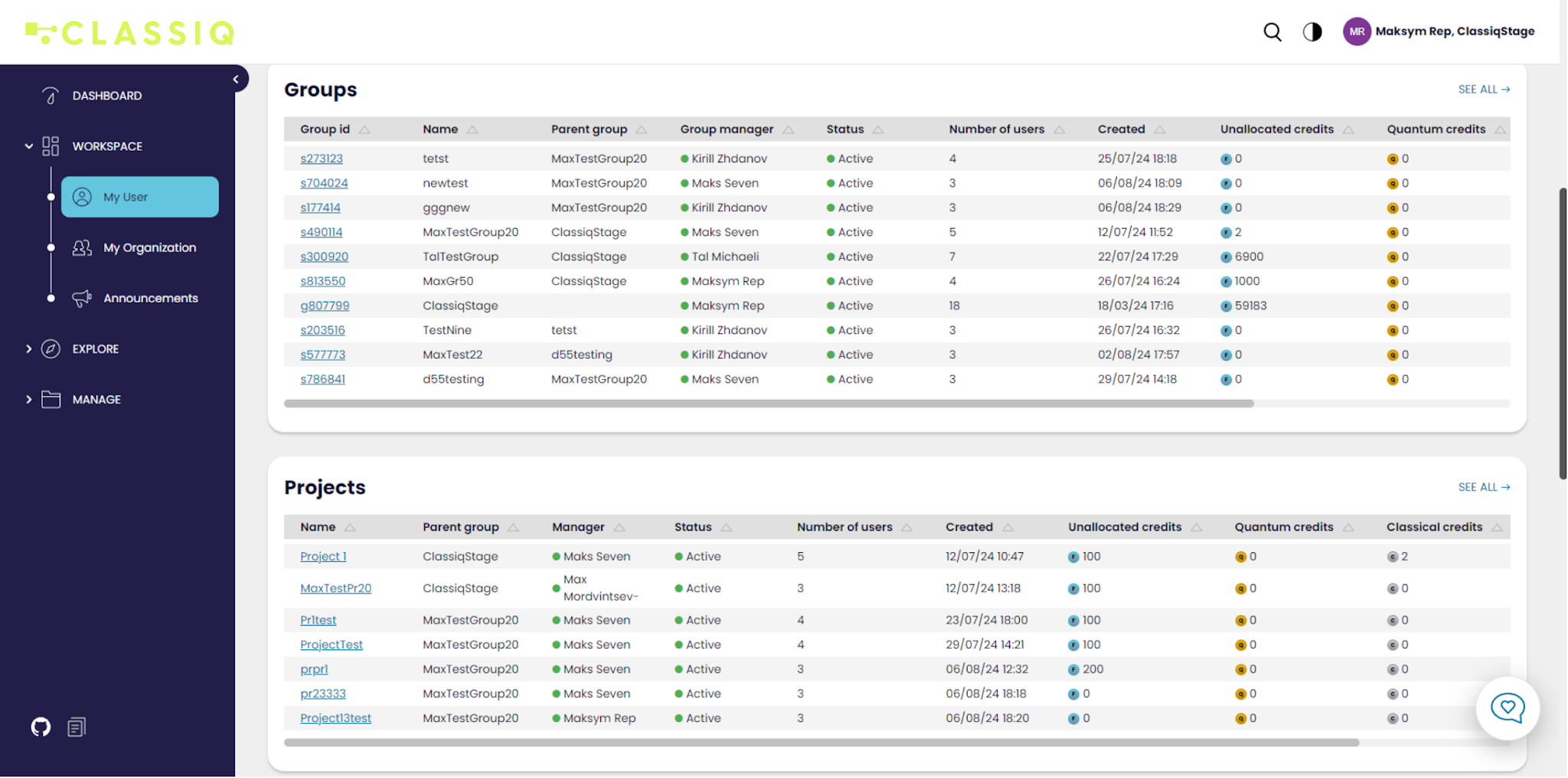
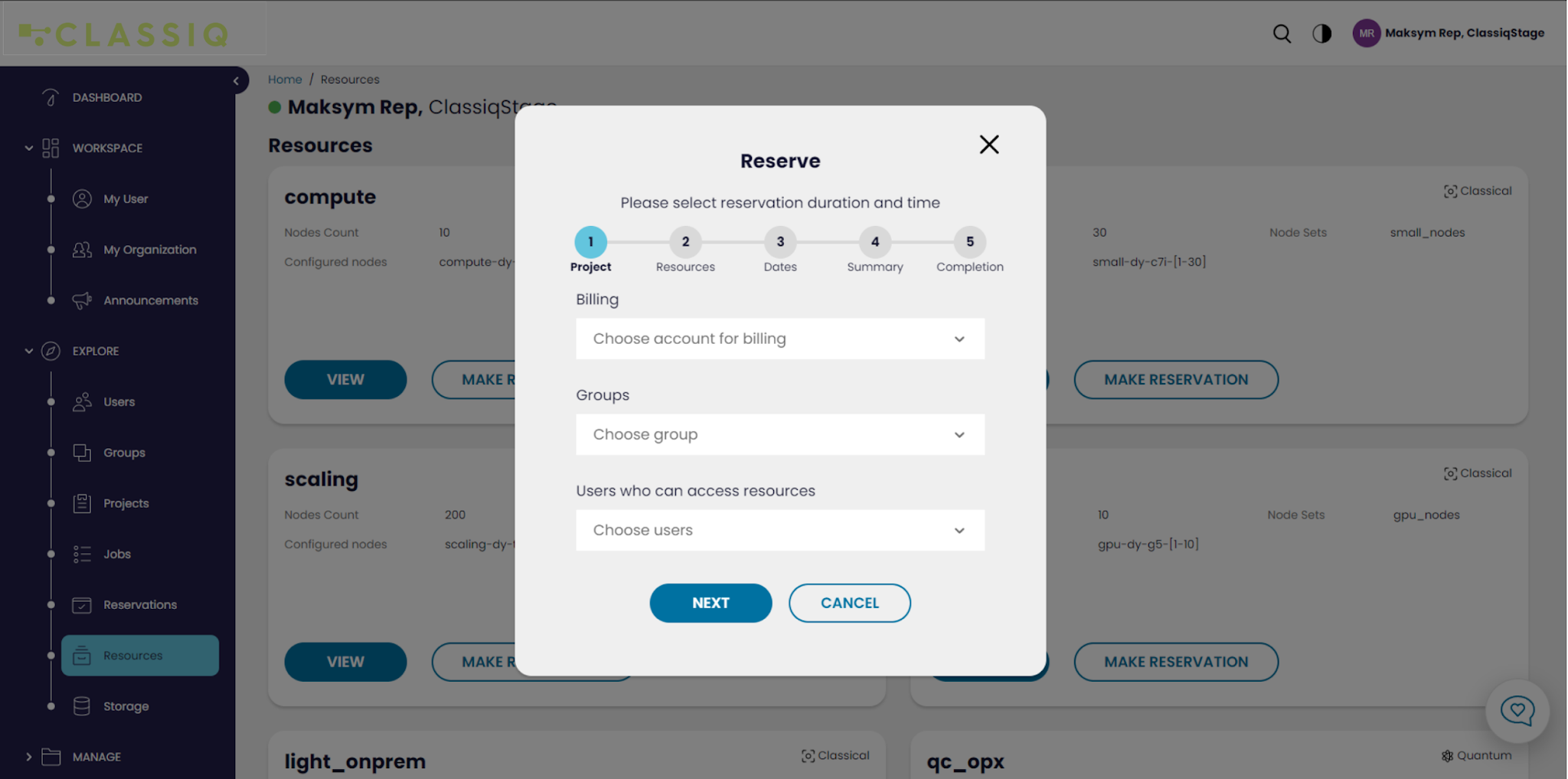
- Management Portals - The Classiq Manager provides a unified set of management portals as a frontend for tracking and operating quantum usage across the organization.
- User Portal - The User Portal gives quantum developers and researchers a clear view of their activity and resources. Users can monitor submitted jobs, review execution status and history, and track available hardware credits to plan and manage their workload effectively.
- Admin Portal - The Admin Portal is designed for administrators and program owners to control and optimize resource usage. It enables credit allocation, transfer, tracking, and billing, while providing dashboards for key resource utilization metrics and KPIs across users, projects, and quantum backends.
Making Heterogeneous Quantum Hardware Usable
IQCC provides an important example of what future quantum computing environments may look like: multiple quantum technologies operating alongside classical HPC and GPU resources.
For software, that means the target cannot be a single quantum computer.
Classiq separates the application model from its hardware-specific implementation. When a different backend is selected, the synthesis process can account for characteristics such as connectivity and native gate sets and generate an implementation suited to that target.
Researchers can therefore experiment across hardware technologies, compare implementations, and adapt as new systems become available while keeping the application logic intact.
For HPC centers, the same approach provides a software abstraction between users and an evolving collection of quantum resources.
As quantum hardware continues to develop, that abstraction becomes increasingly important. The objective is not simply to provide access to a QPU. It is to make QPUs usable as part of the broader computing environment researchers already rely on.
At IQCC, Classiq and Quantum Machines are putting that model into practice: connecting high-level quantum development, hardware-aware synthesis, HPC job orchestration, heterogeneous quantum hardware, and centralized resource management in one integrated stack.
Classiq & QM Collaborating on the Israeli Quantum Computing Center
Classiq provides the quantum software layer at the Israeli Quantum Computing Center (IQCC), connecting its HPC environment with multiple quantum hardware technologies. This integration enables researchers to develop, optimize, and execute quantum applications across different QPUs through a unified workflow.
The collaboration
Within the Israeli Quantum Computing Center (IQCC), Classiq provides advanced quantum software capabilities that complement the center’s unique multi-hardware environment and its tight integration of quantum systems with high-performance classical computing.
The IQCC, opened by Quantum Machines at Tel Aviv University with support from the Israel Innovation Authority, is designed as an open, interoperable facility that integrates multiple co-located quantum computers based on different qubit modalities with NVIDIA DGX Quantum and cloud resources, supporting hybrid quantum-classical workflows.
By making high-level quantum program synthesis and hardware-aware circuit optimization available to IQCC users, Classiq helps researchers and developers rapidly turn algorithmic ideas into runnable circuits across different backends. This accelerates experimentation, supports performance comparisons across platforms, and enables teams to focus on application logic rather than low-level circuit engineering.
Technical explanation
Classiq provides three main components to IQCC:
- Quantum software development platform, connected to the IQCC quantum backends, and enabling Classiq’s users to leverage the IQCC backends through the Classiq platform.
- Software package, enabling users to submit quantum jobs to the HPC scheduler. It is a user-side stack for integrated HPC-QC.
- Management Portals - The Classiq Manager provides a unified set of management portals as a frontend for tracking and operating quantum usage across the organization.
- User Portal - The User Portal gives quantum developers and researchers a clear view of their activity and resources. Users can monitor submitted jobs, review execution status and history, and track available hardware credits to plan and manage their workload effectively.
- Admin Portal - The Admin Portal is designed for administrators and program owners to control and optimize resource usage. It enables credit allocation, transfer, tracking, and billing, while providing dashboards for key resource utilization metrics and KPIs across users, projects, and quantum backends.
Making Heterogeneous Quantum Hardware Usable
IQCC provides an important example of what future quantum computing environments may look like: multiple quantum technologies operating alongside classical HPC and GPU resources.
For software, that means the target cannot be a single quantum computer.
Classiq separates the application model from its hardware-specific implementation. When a different backend is selected, the synthesis process can account for characteristics such as connectivity and native gate sets and generate an implementation suited to that target.
Researchers can therefore experiment across hardware technologies, compare implementations, and adapt as new systems become available while keeping the application logic intact.
For HPC centers, the same approach provides a software abstraction between users and an evolving collection of quantum resources.
As quantum hardware continues to develop, that abstraction becomes increasingly important. The objective is not simply to provide access to a QPU. It is to make QPUs usable as part of the broader computing environment researchers already rely on.
At IQCC, Classiq and Quantum Machines are putting that model into practice: connecting high-level quantum development, hardware-aware synthesis, HPC job orchestration, heterogeneous quantum hardware, and centralized resource management in one integrated stack.